Qiongju Opera
Introduction
Qiongju Opera, also known as Qiong Opera, is a traditional form of Chinese opera originating from Hainan province. It holds a significant place in China's cultural heritage, having been recognized as a national intangible cultural heritage in 2008.
The opera is unique to the Hainan area and has been part of the local cultural scene since the Ming Dynasty (1368-1644). At its core, Qiongju Opera integrates the local dialect with folk music and dance elements, creating a distinctive narrative style that reflects the region's cultural identity. It plays an essential role in preserving and promoting the rich traditions of Hainan, contributing to the broader spectrum of Chinese operatic arts.
Characteristics
Qiongju Opera is distinguished by several unique characteristics that set it apart from other Chinese opera forms. These features include its musical elements, costumes and makeup, and performance style, all of which contribute to its vibrant and expressive nature.
Musical Elements
The musical elements of Qiongju Opera are deeply rooted in the folk traditions of Hainan. The music typically involves a combination of local dialect and traditional melodies, creating a soundscape that is both familiar and evocative for audiences from the region. Instruments commonly used in Qiongju performances include the erhu, pipa and various percussion instruments, all of which are employed to enhance the emotional impact of the narratives. The orchestration and vocal techniques employed are designed to complement the storytelling, with an emphasis on lyrical expression and melodic flow that captures the essence of the characters and plots.
Costumes and Makeup
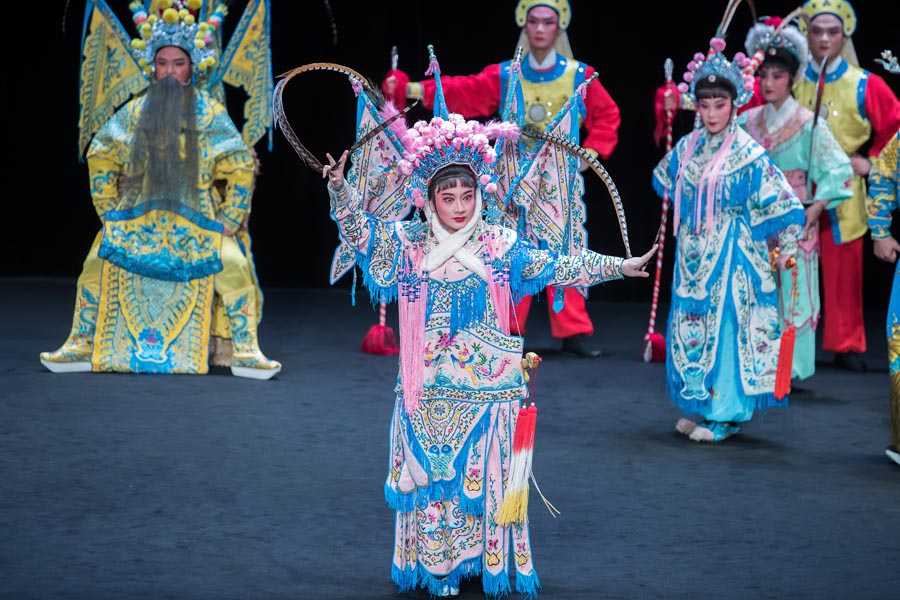
Costumes and makeup are integral to the visual identity of Qiongju Opera, helping to bring characters to life on stage. The costumes are often elaborate, with vibrant colors and intricate designs that reflect the period and status of the characters portrayed.
Makeup in Qiongju Opera is similarly stylized, using bold colors and distinct patterns to convey character traits and emotions. These visual elements not only enhance the theatricality of the performances but also serve as a visual storytelling tool that communicates cultural symbolism and historical context to the audience.
Performance Style
The performance style of Qiongju Opera is a harmonious blend of acting, singing and dance, all of which are executed with a high degree of precision and expressiveness. The actors are trained to perform with a particular attention to detail in their gestures and movements, which are often symbolic and steeped in traditional meanings. This performance style emphasizes the integration of performing arts to convey complex narratives and emotional depth, making Qiongju Opera a compelling theatrical experience. The interplay between performers' vocal and physical expressions is essential in capturing the opera's distinctive essence, providing audiences with an immersive and culturally rich spectacle.
Repertoire
The repertoire of Qiongju Opera encompasses a diverse range of stories and themes, reflecting both historical and contemporary narratives. These operas often draw on local legends, historical events and notable figures from Hainan's past, providing a window into the cultural and social dynamics of the region.
Notable works include operas such as "The Imperial Strife", which depicts the power struggles of ancient China, and "Huang Daopo", which tells the story of a prominent figure in the early Chinese textile industry. These narratives are brought to life through the opera's unique artistic style, allowing audiences to engage with Hainan's rich cultural heritage through compelling storytelling.
Cultural Promotion Efforts
Efforts to promote Qiongju Opera as a cultural treasure have been underway through various initiatives and events. Cultural festivals, such as the Dazhipo Qiongju Opera Cultural Festival, play a crucial role in celebrating and revitalizing this traditional art form. These festivals often feature competitions for original works and highlight the contributions of distinguished opera artists, thereby nurturing new talent and ensuring the continuity of the opera tradition.
Additionally, international exhibitions and cultural exchanges, such as the European tour exhibition of Hainan provincial intangible cultural heritage, aim to raise awareness and appreciation for Qiongju Opera among global audiences. Such initiatives are instrumental in preserving the opera's legacy and encouraging its growth as a dynamic and evolving art form.








